
For one hundred years, the Kenya School of Government has played a pivotal role in developing visionary leaders, strengthening governance, and transforming public service across Kenya. The KSG @100 Centenary Conference celebrates this remarkable journey while bringing together leaders, policymakers, researchers, development partners and innovators to shape the future of governance.
This conference is both a celebration of our legacy and a platform for charting the next century of public service excellence.
"In every chapter of Kenya's history, from independence to the present day, training and capacity development have been central to progress. What began decades ago as the Jeanes School grew steadily into a space where leaders were molded, administrators were shaped, and institutions were strengthened."
The inception and growth of the Kenya School of Government can be likened to a mustard seed that blossomed into a great tree.
Born on 7th April 1822 in Philadelphia, Pennsylvania, USA, Anna was the daughter of a devout Quaker family. She inherited the entire family fortune and became a philanthropist who dedicated her wealth to education and healthcare for the less fortunate.
Upon her death in 1907, Anna entrusted all her fortune to the Quaker Philadelphia Yearly Meeting of Friends, with a handwritten will that stipulated the establishment of a training centre for Africans in Kenya.
Quakers, also known as the 'Religious Society of Friends', are Christians whose faith is anchored in the 'Peace Testimony' — speaking truth to power, abhorrence to war, and condemning perpetrators of injustice.
In 1902, American Friends sponsored three missionaries who arrived in Mombasa, Kenya, and were received by the District Commissioner, planting the seed for what would become Jeanes School.
The Phelps-Stokes Commission of 1924 recommended practical, community-based training in farming, health, crafts, and leadership. Inspired by Anna T. Jeanes' rural education model in the U.S., the colonial government founded the Jeanes School in 1925 at Lower Kabete, Nairobi.
Focus Areas: Men trained in farming, carpentry, and record keeping. Women learned home care, hygiene, and childcare. Chiefs and inspectors studied leadership, taxation, and sanitation.
Mission: Families who could "teach by living" — a living model of community development.
From Jeanes School to Kenya School of Government — a century of transformation, resilience, and impact.
Recommends practical, community-based training for Africans in farming, health, crafts, and leadership. The Devonshire White Paper declares African interests paramount.
Lower Kabete, Nairobi. Named after philanthropist Anna T. Jeanes. The first institution of its kind in East Africa, training Africans in practical and vocational skills.
Jeanes School converted into a military camp for the King's African Rifles. Africans serve as clerks, supervisors, and administrators, gaining new administrative skills.
The Mau Mau uprising signals independence is inevitable. The need for African leadership grows — Africans must be prepared to govern themselves.
Jeanes School closes. KIA is established to train Africans in governance, economics, policy, and administration — the crucible of Africanisation.
The Union Jack is lowered, the Kenyan flag is raised. KIA becomes the engine room preparing Africans for senior leadership roles in the new nation.
Embu, Mombasa, Matuga and Baringo GTIs established to decentralize training. Maseno branch becomes Maseno University (1990); health training becomes KMTC.
Ndegwa Commission (1971), Wamalwa Report (1979), and Waruhiu Committee (1980) push for efficiency, integrity, and ethical leadership in training.
Governance devolved to districts. GTIs and KIA become training grounds for participatory planning, budgeting, and grassroots mobilization.
UoN's Faculty of Commerce moves onto Kabete grounds. Government reverses the decision in December 1988, restoring KIA's full autonomy.
Mandate expanded to include training, consultancy, and research services, shaping officers who keep government running.
Places efficiency, accountability, and results at the centre of governance. Performance Contracting introduced in 2004.
Over 19,000 people trained, revenue doubled, ISO 9000:2007 Certification, and a UN Public Service Award (2007).
Launched, demanding a public service capable of delivering flagship projects in infrastructure, healthcare, education, and governance.
Devolution creates 47 county governments, requiring massive training on county administration, finance, budgeting, and service delivery.
The KSG Act unites KIA, KDLC, and all GTIs into a single institution — developing a transformative public service for Vision 2030.
KSG equips leaders and strengthens county governance through forums, performance contracting workshops, and policy dialogues.
Established to advance gender equality, equity, and inclusion, including the Leadership Programme for County Social Transformation.
Regional Centre of Competence established with UNDP, Microsoft and the Ministry of ICT. Centre for Climate Change leads climate adaptation.
Convention Centre and Margaret Kobia Hostel completed at Lower Kabete; new facilities at Mombasa, Matuga, Baringo and Embu.
The KSG @100 Centenary Conference, honouring a century of public service excellence and charting the future.
Historical evolution from Jeanes School (1925) through KIA (1961) to KSG (2012). Governance reforms, lessons from distinguished public servants, and the enduring KSG legacy.
Leadership, accountability, citizen-centred service delivery, public sector reforms, and strategic partnerships driving Kenya's development across 47 counties.
Artificial Intelligence, digital government, future skills, climate governance, innovation, youth and gender inclusion — positioning Kenya as Africa's hub of governance excellence.
Honouring the founders and pioneers who shaped Kenya's governance. Sessions on the Jeanes School legacy, Africanisation, historical milestones, and lessons from distinguished public servants including Tom Mboya (late), President Daniel arap Moi (late), and Rt. Hon. Raila Odinga (late).
Current governance challenges, devolution across 47 counties, service delivery, ethics and integrity, public sector reforms, performance contracting, and the role of KSG in shaping modern public service for Vision 2030.
Innovation, Artificial Intelligence, Digital Government, Climate Governance, Youth and Gender Leadership, and positioning Kenya as a continental beacon of governance excellence.
Foundations of Kenya's public service from the colonial era through independence — the Jeanes School legacy, KIA, and Africanisation.
Current reforms, devolution, performance management, citizen engagement, service delivery excellence, ethics, and accountability.
Digital transformation, AI adoption, climate governance, innovation, and next-generation public service leadership for Vision 2030.
Empowering young leaders, the Youth Development Centre, innovation hubs, Corps Africa, and preparing the next generation of public servants.
Gender equality, social inclusion, women in leadership, the Institute of Gender and Social Development, and the fight against FGM.
The Centre for Climate Change and Environmental Governance, the Global Adaptation Center, and Kenya's role in continental climate action.
From Jeanes to KIA, the story of this institution was written not only in policy and reforms, but in the dedication of the leaders who steered it forward.
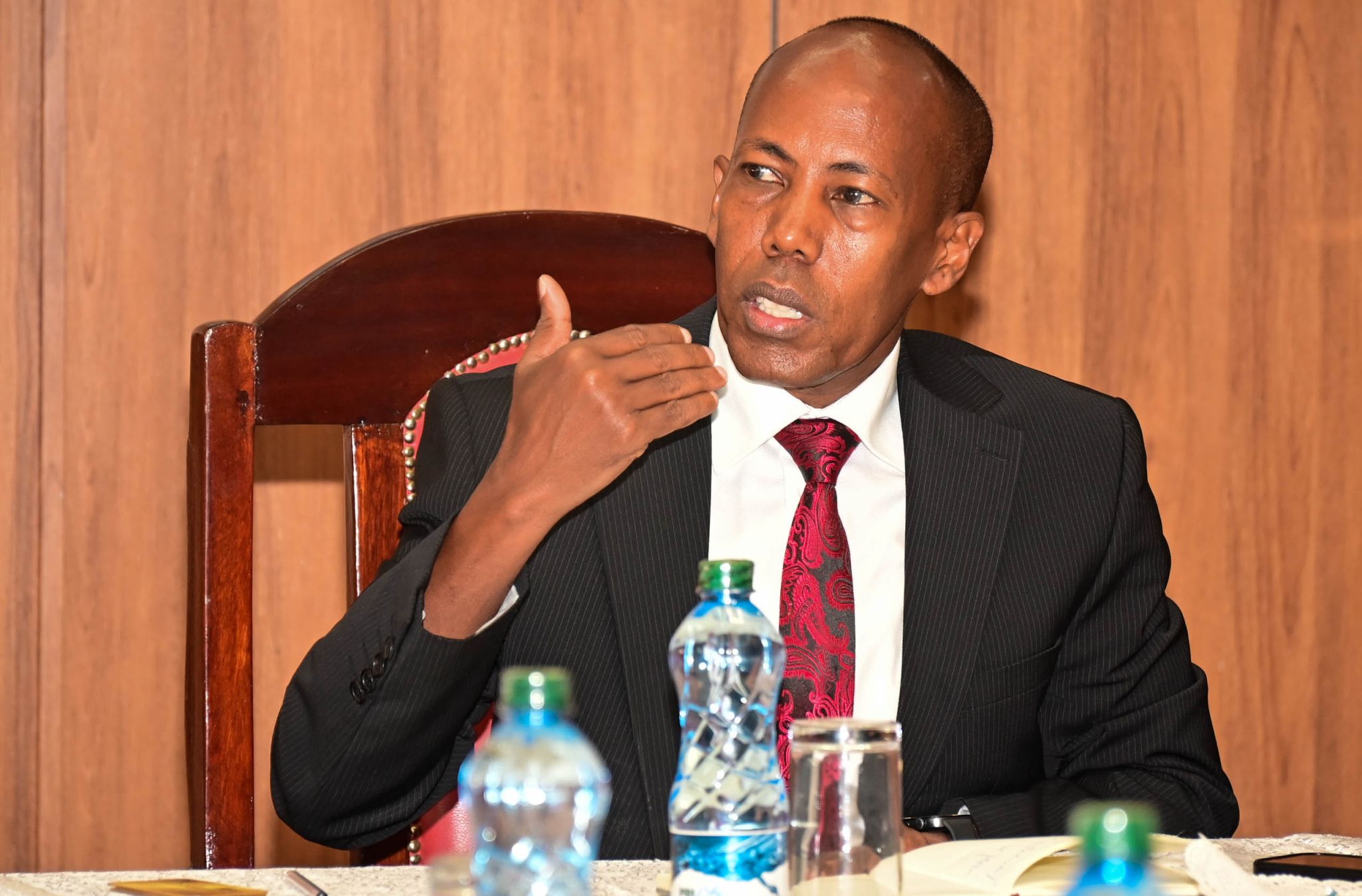
Current Director General, Kenya School of Government — leading the institution into its next century of excellence.
Each of these leaders, in their time, left a mark on the institution's story. Their stewardship made possible the achievements of KIA and paved the way for the rise of the Kenya School of Government.
100 years of public service excellence — measurable impact across Kenya and beyond.
Developed e-learning programmes to reach a wider clientele. Over 19,000 people trained between 2006 and 2009. Curriculum regularly reviewed for relevance, with strong external partnerships in research, training, and consultancy.
ISO 9000:2007 Certification, upgraded to ISO 9000:2008 by KEBS. Quality Assurance Unit established. UN Public Service Award (2007) for Accountability, Transparency, and Responsiveness. Rated "Very Good" under Performance Contracting in 2006, 2007, and 2009.
KIA Conference Centre (2008), Habel Nyamu Centre (2011), Leadership Resource Centre (2009), KIA Museum, and new hostels, recreation facilities, and modern campuses across Lower Kabete, Mombasa, Matuga, Baringo, and Embu.
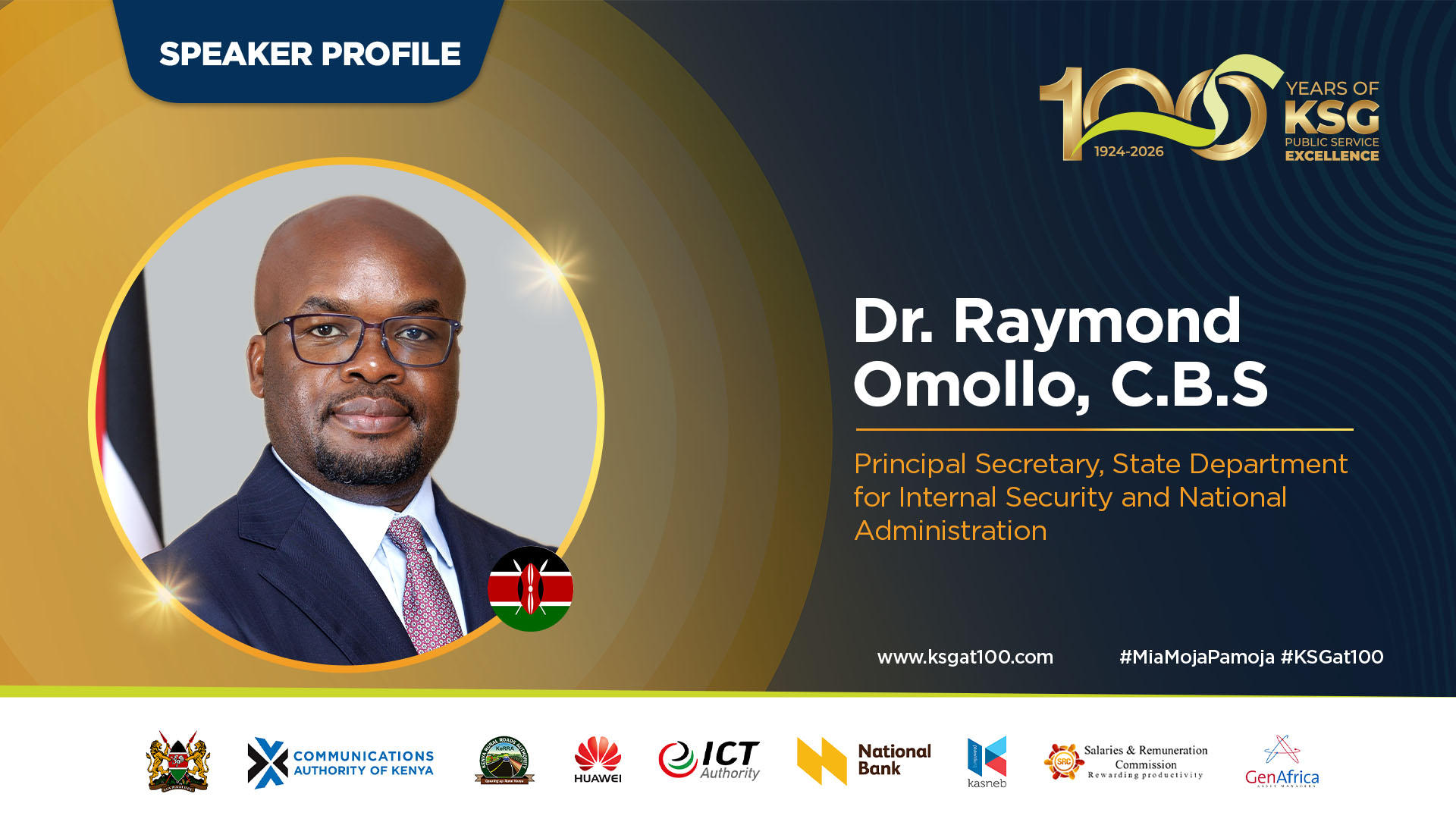
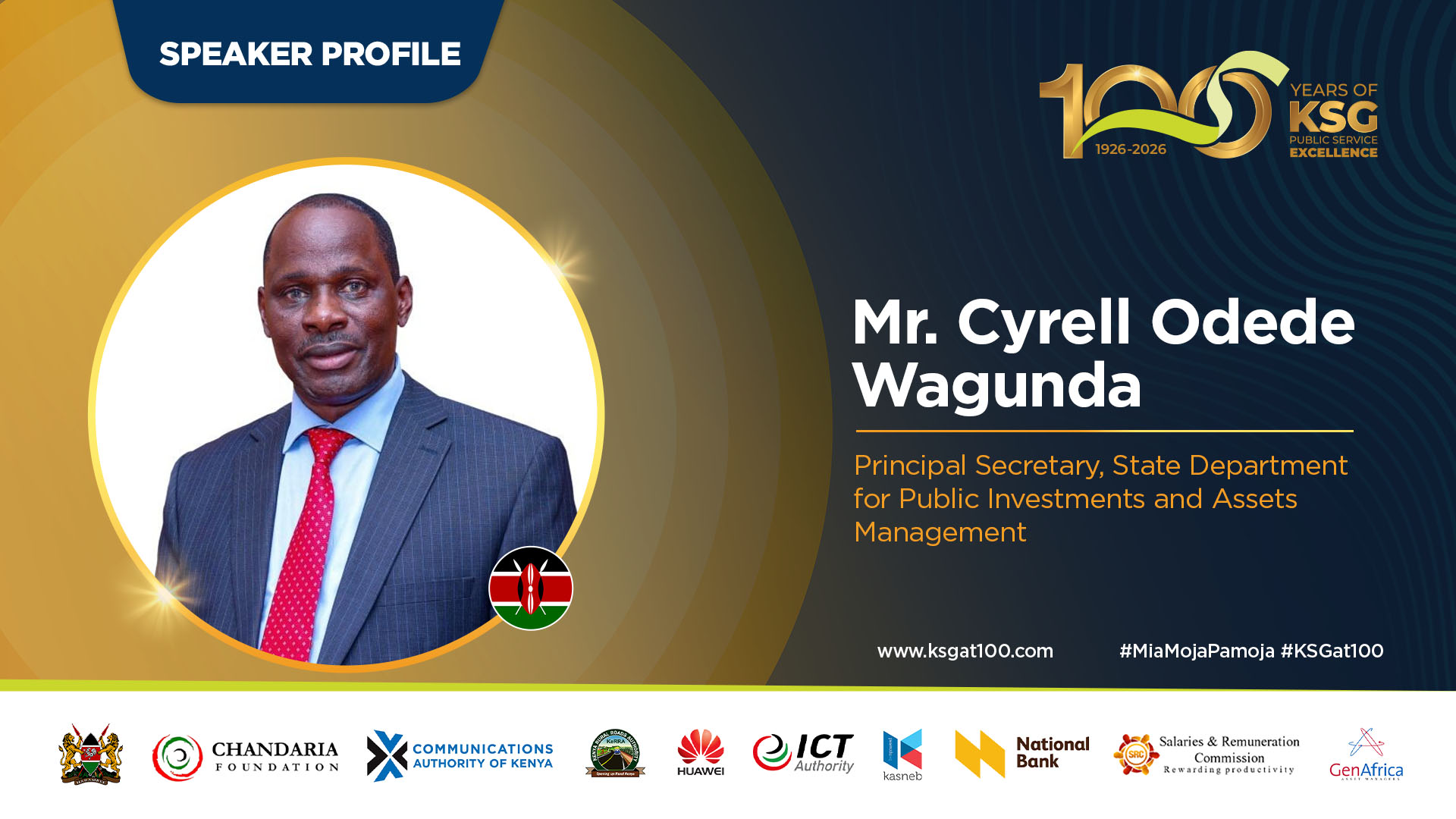
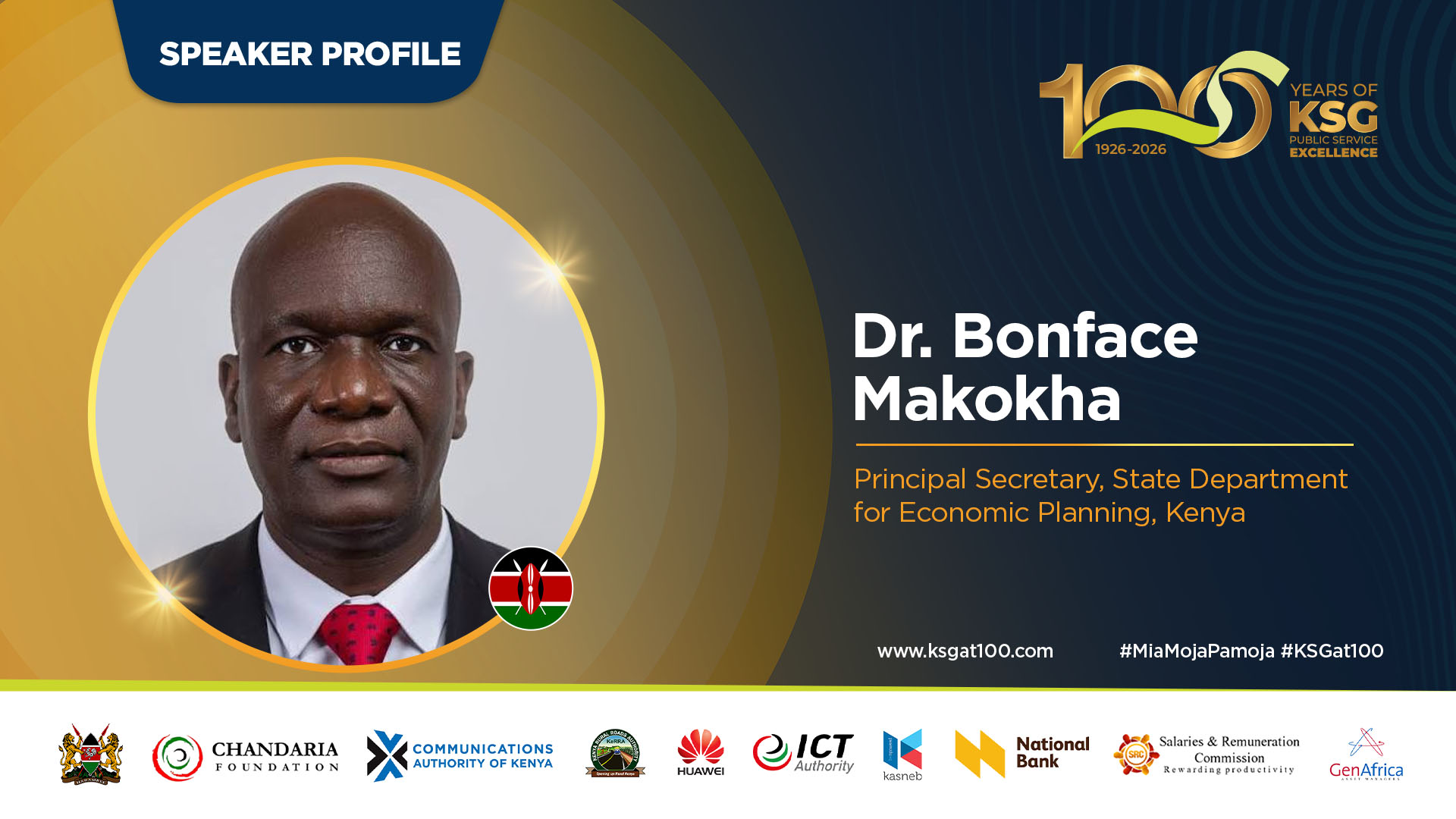
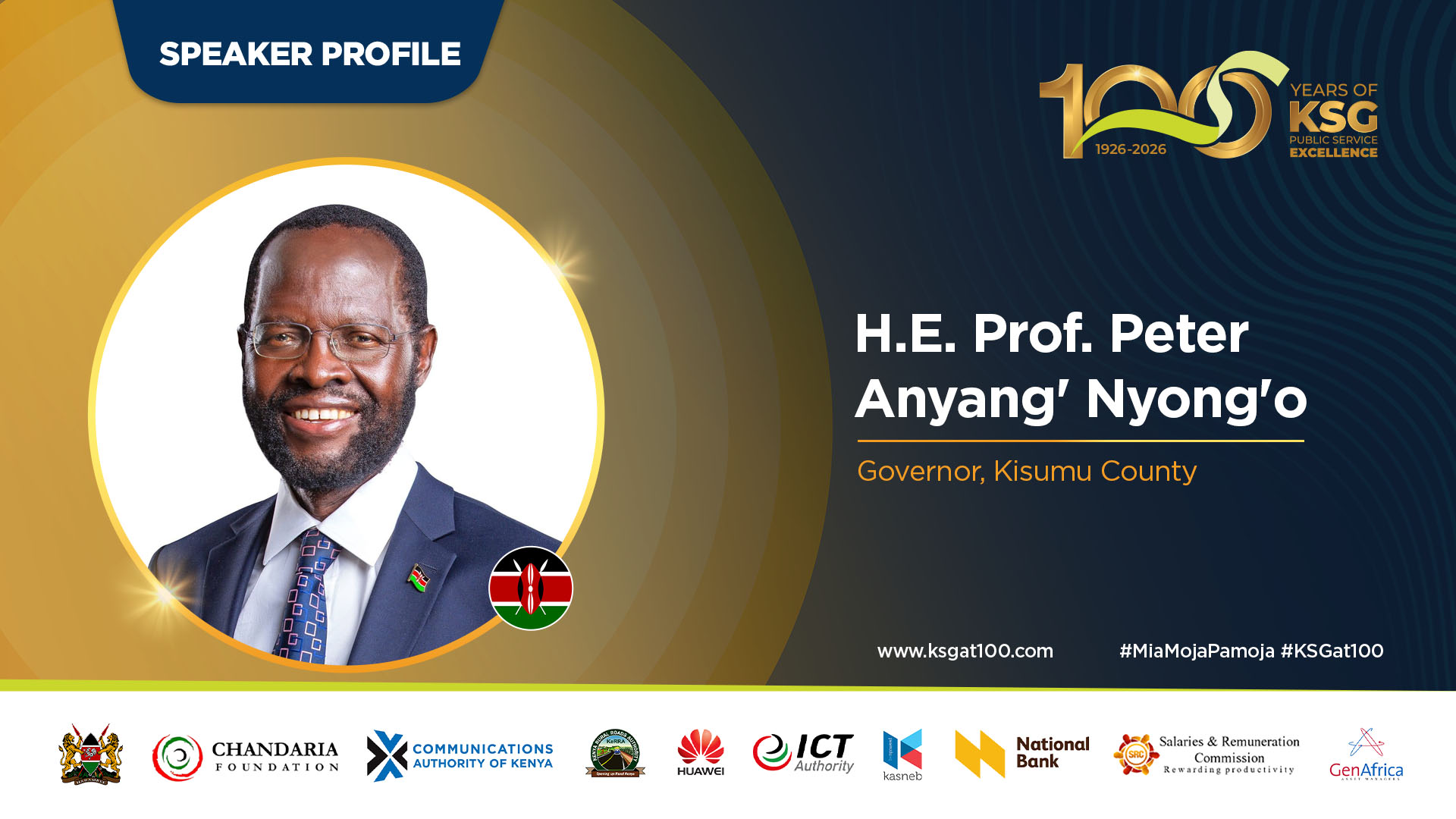
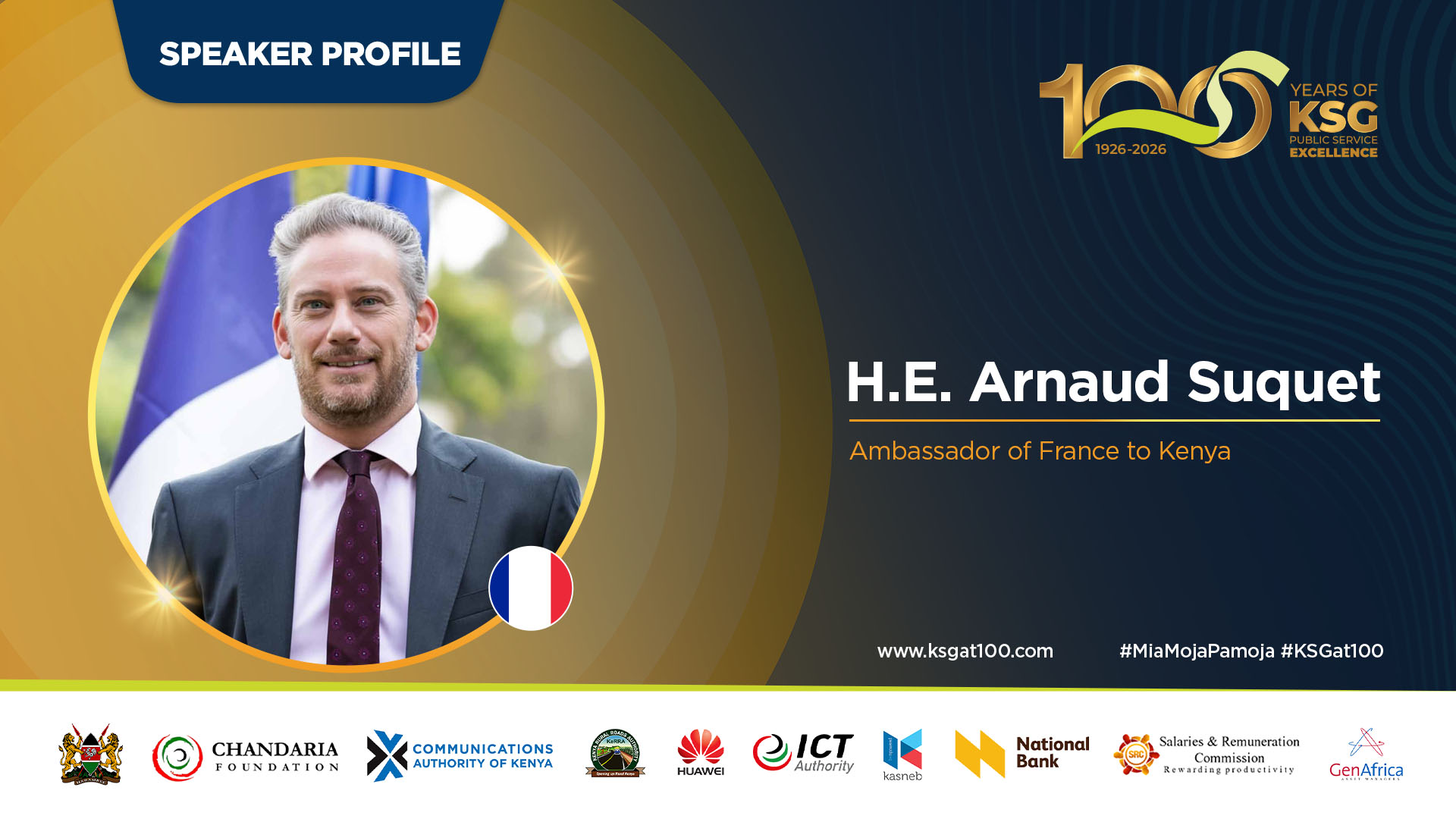
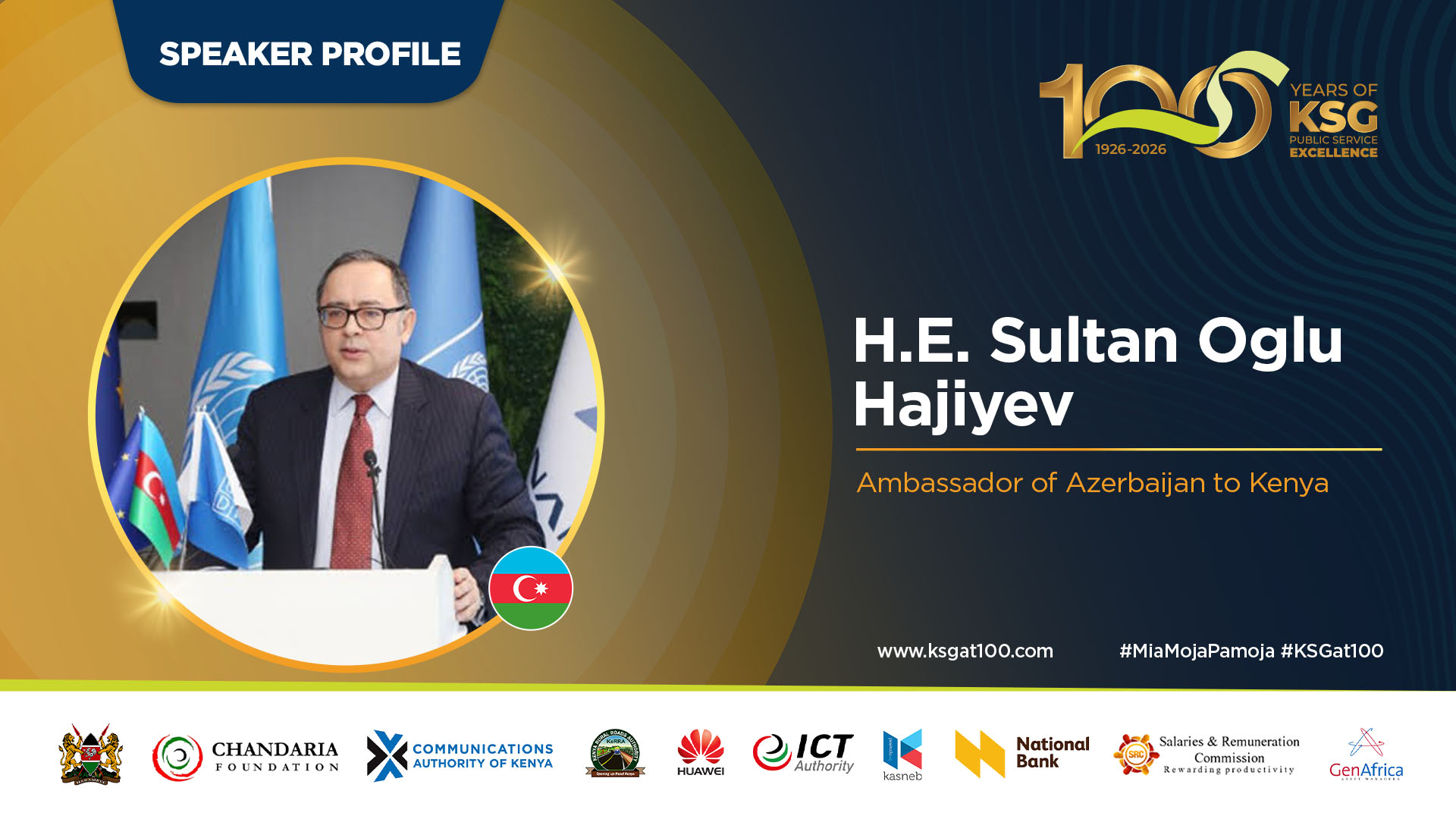
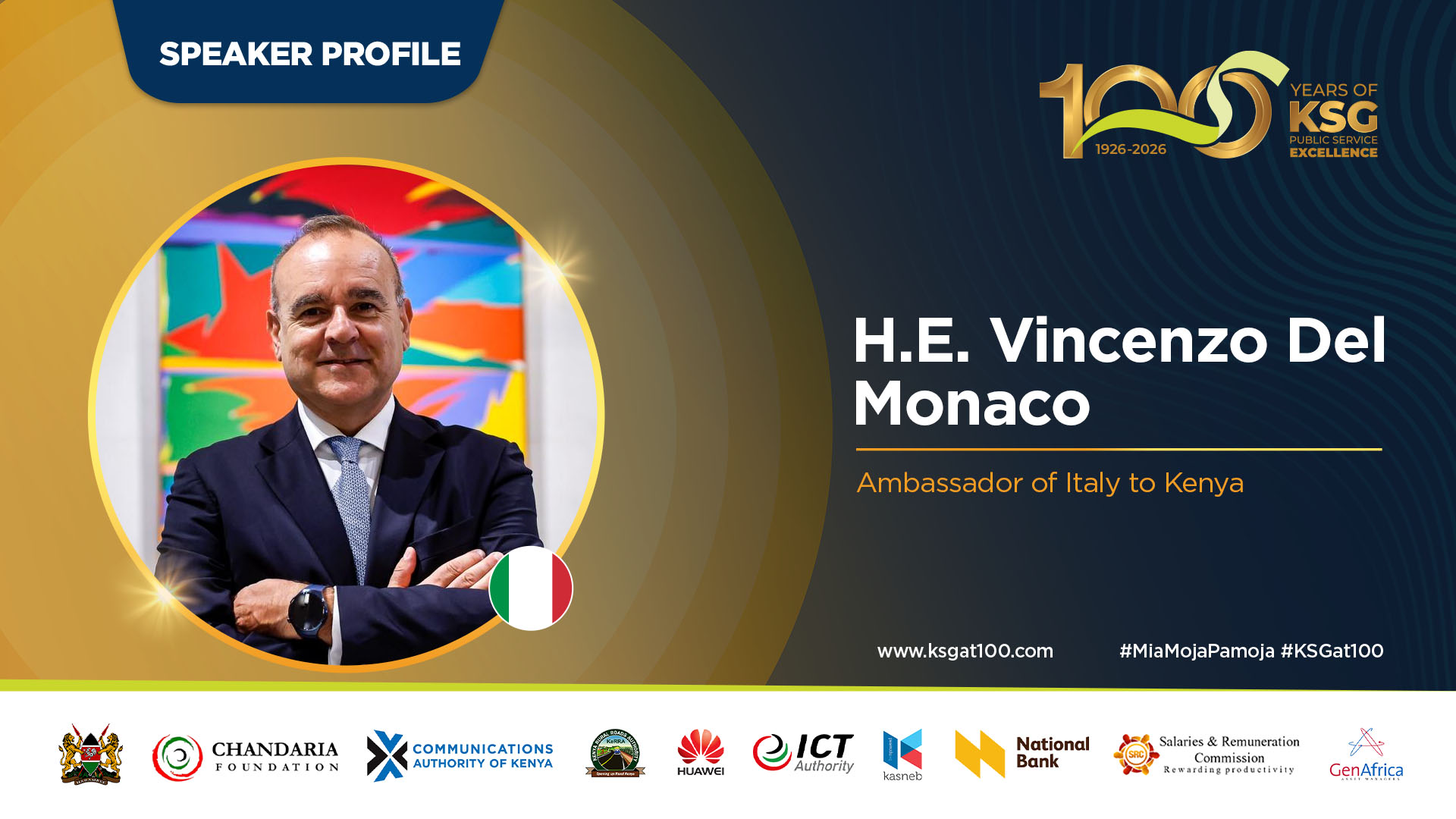
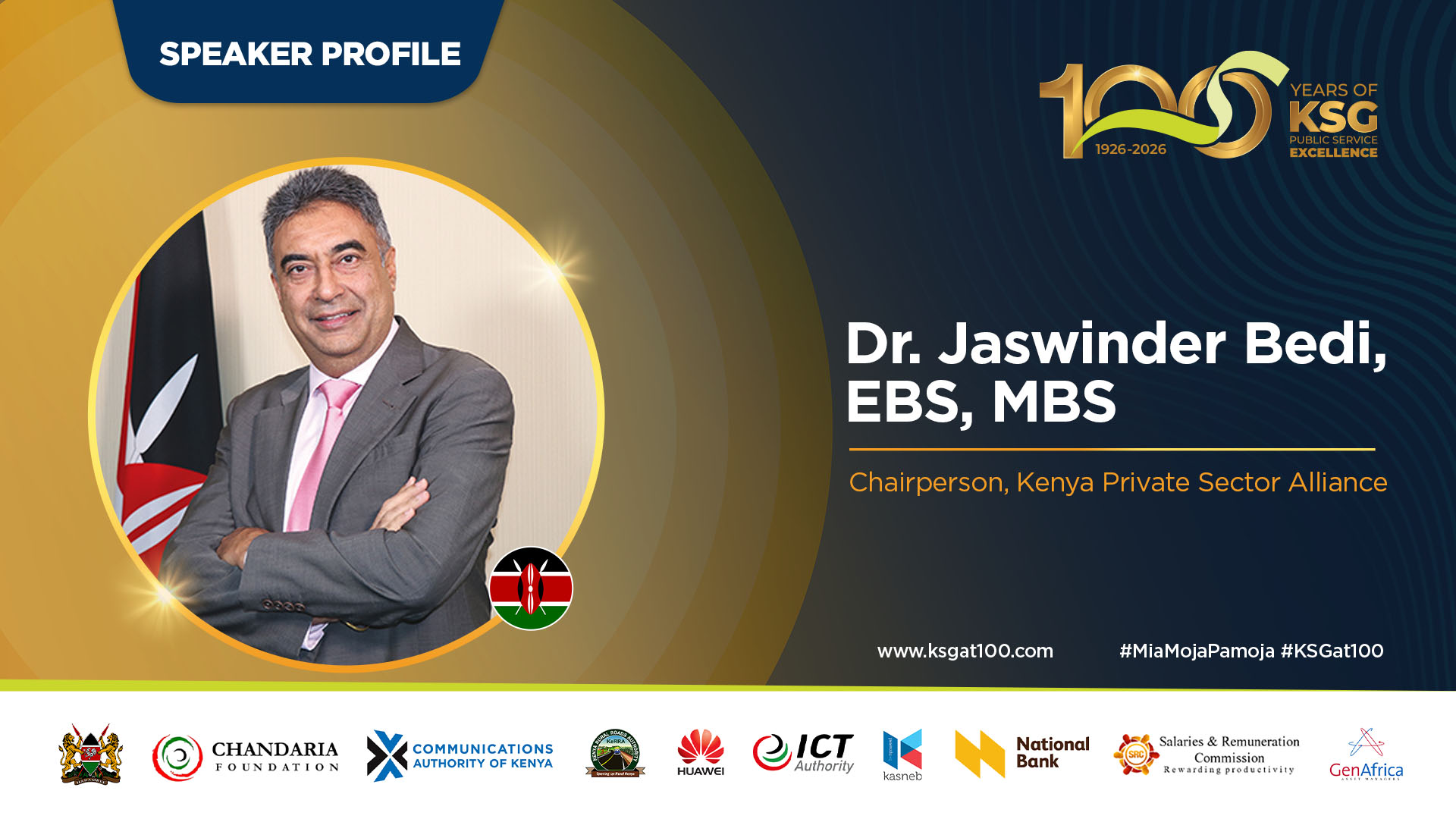
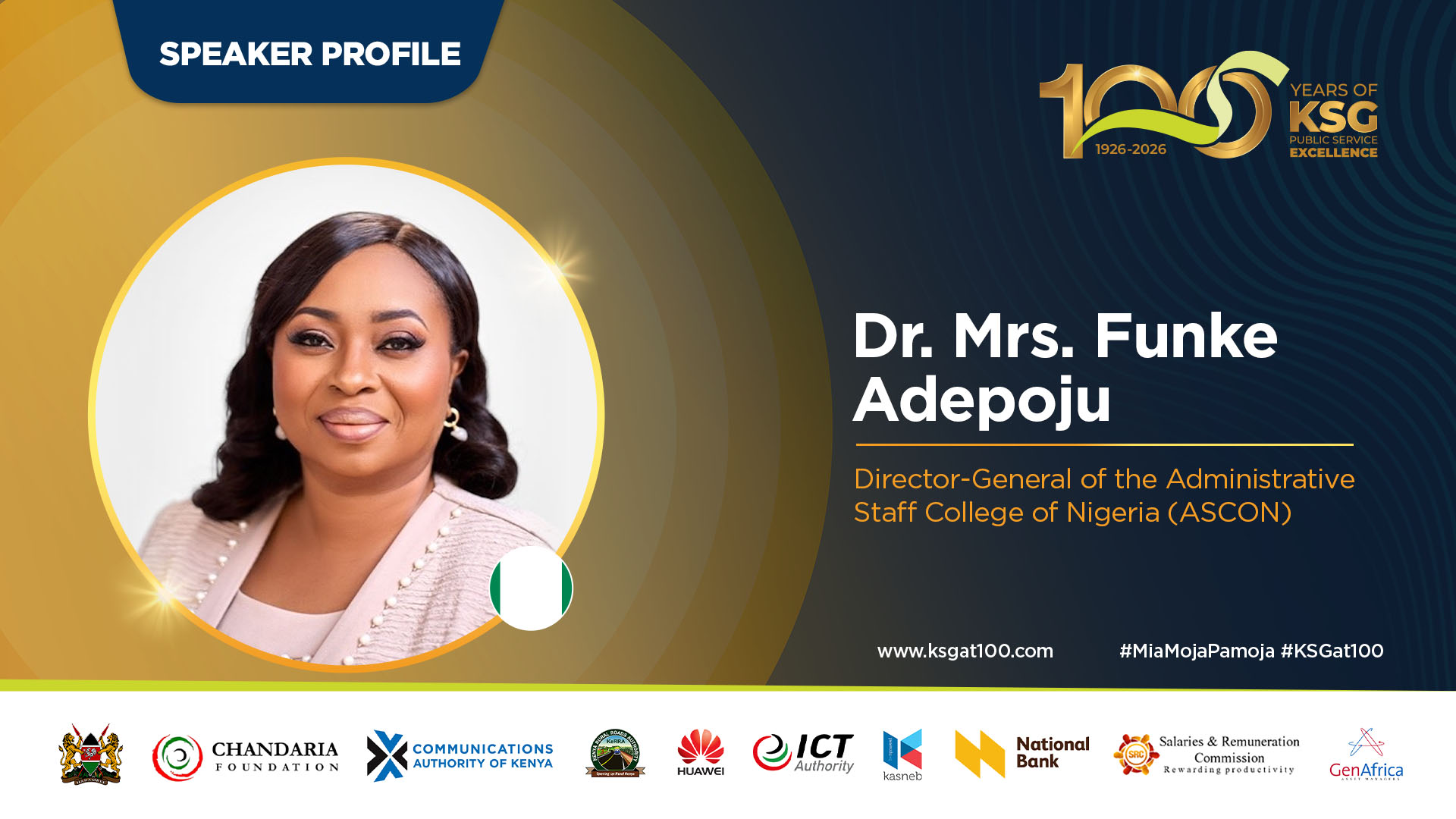
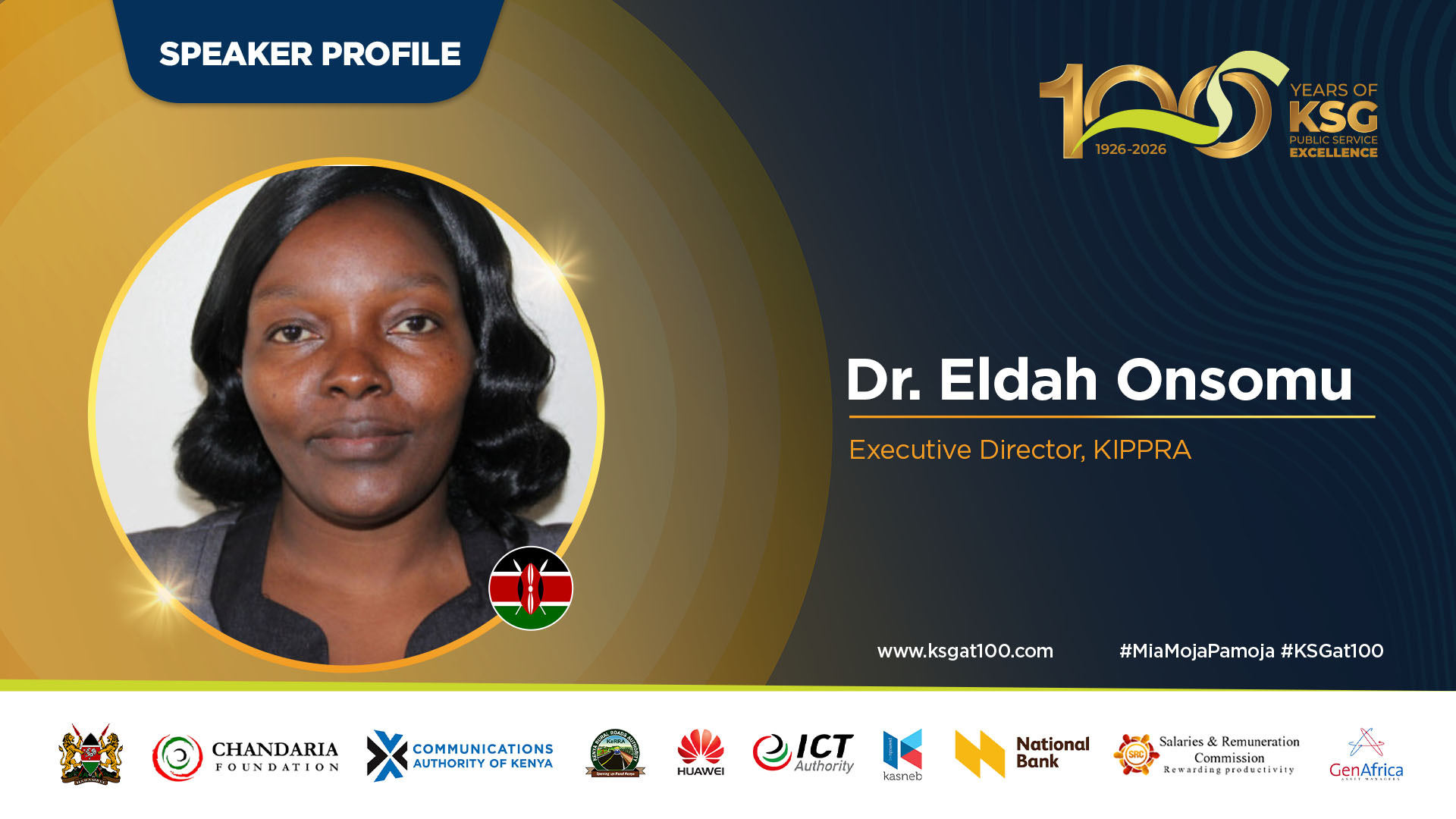
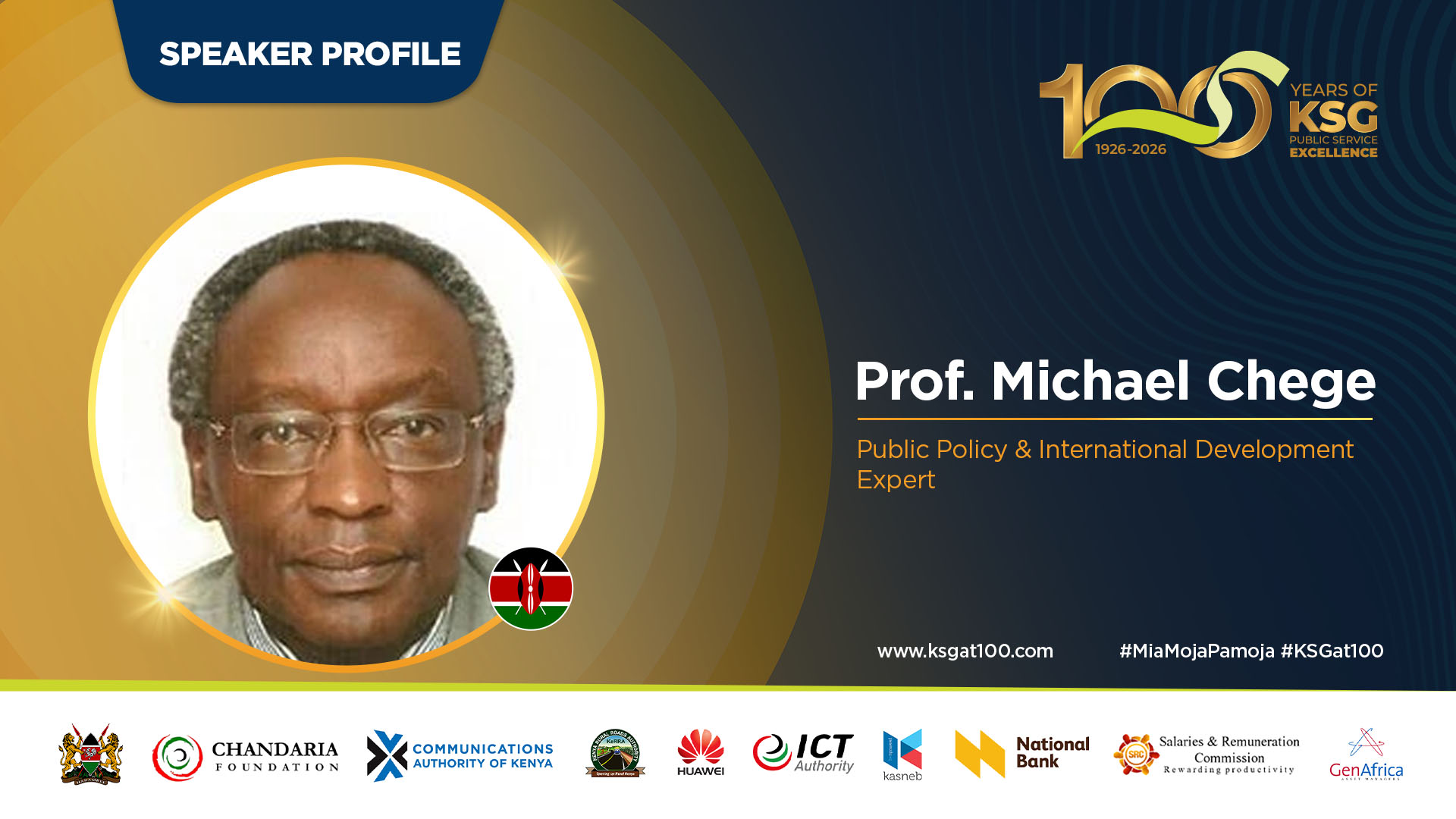
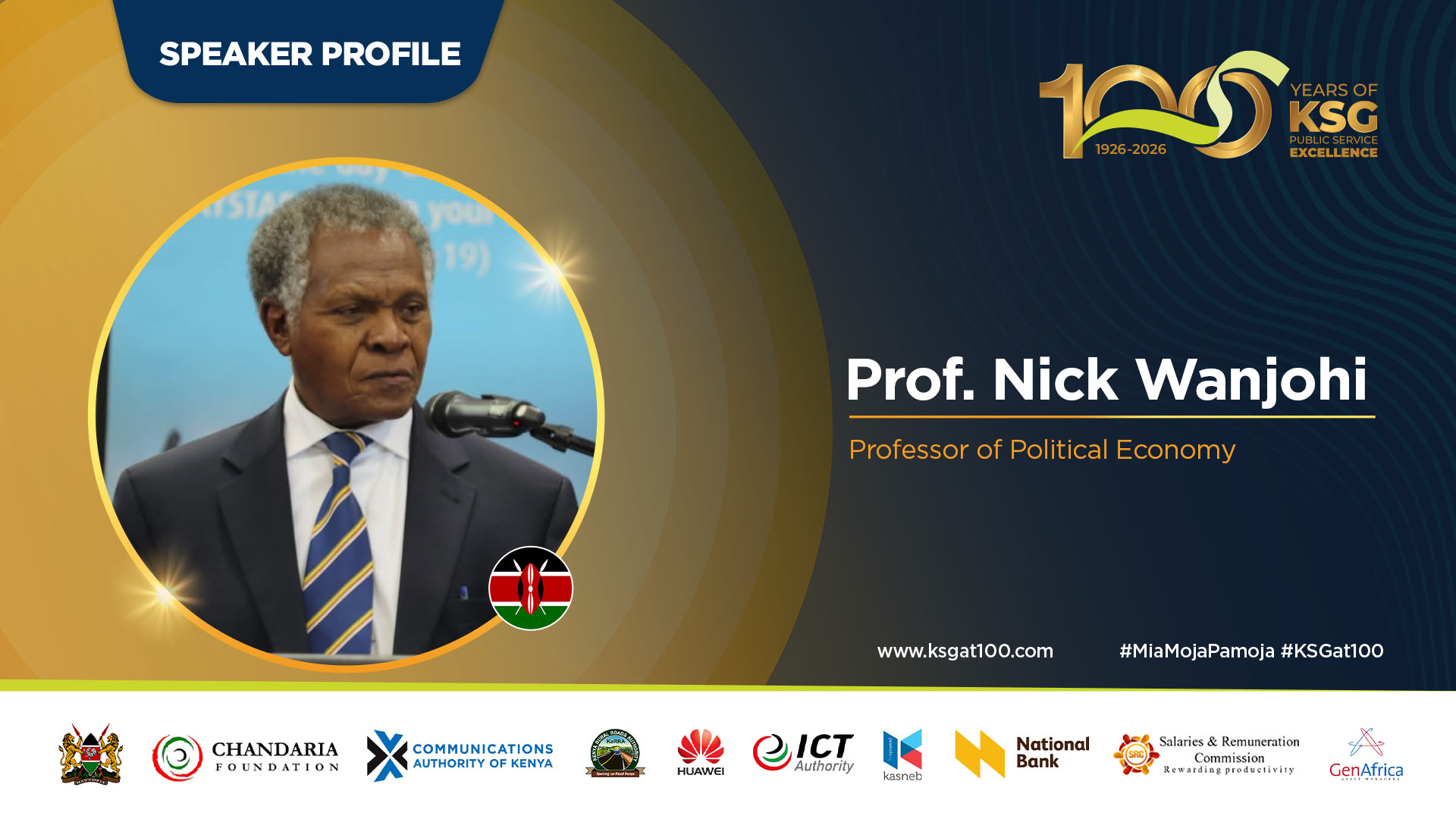
Distinguished leaders, policymakers, and visionaries sharing insights at the KSG @100 Centenary Conference
Strategic Partners
Moments from Jeanes School, KIA, and KSG history.
Explore key moments and milestones from a century of public service excellence.
KSG empowers youth through leadership development, innovation hubs, and community engagement — building a capable, ethical, and future-ready public service.
Innovation hubs in Isiolo, Tana River, Kilifi, and Busia offering leadership training, digital skills, entrepreneurship support, and civic education for youth inclusion and sustainable livelihoods.
Mentorship programme connecting experienced public sector leaders with emerging professionals for knowledge transfer, leadership coaching, and succession planning.
Empowers student leaders from universities and tertiary institutions with practical skills in governance, diplomacy, ethical decision-making, and conflict resolution.
Continental platform co-hosted with CorpsAfrica convening young leaders, policymakers, and innovators across Africa to drive youth leadership and digital transformation.
Community outreach initiative bringing government services, civic education, and leadership training to grassroots communities — strengthening government-citizen engagement.
KSG's youth initiatives support BETA, Vision 2030, AU Agenda 2063, and SDGs — building public service capacity and promoting community participation in national development.
Watch the journey of a century from Jeanes School to the Kenya School of Government. A story of resilience, transformation, and public service excellence.
A documentary celebrating 100 years of public service excellence
The Kenya School of Government envisions a public service that is not only responsive but anticipatory, aligning governance with citizen aspirations while positioning Kenya as Africa's hub of innovation.
Deepening digital governance, AI adoption, cybersecurity, and innovation management through the Regional Centre of Competence with UNDP, Microsoft, and the Ministry of ICT.
Leading climate adaptation research and establishing a continental Climate Adaptation Hub with the Global Center on Adaptation, driving resilience and sustainability.
Scaling youth and women's leadership and expanding global linkages through the Institute of Gender and Social Development and Youth Development Centre Unit.
As Kenya advances toward Vision 2030 and the Sustainable Development Goals, KSG stands as a continental beacon of governance excellence proving that visionary leadership transforms societies, secures futures, and inspires generations.
KSG @100: a century of public service excellence, press briefing scheduled for the Centenary Conference.
Full programme schedule released with three days of transformative sessions on legacy, present, and future.
Moments from Jeanes School, KIA, and KSG history, 100 years in pictures.
Centenary documentary and highlights from KSG's 100 year journey. Watch the story unfold.
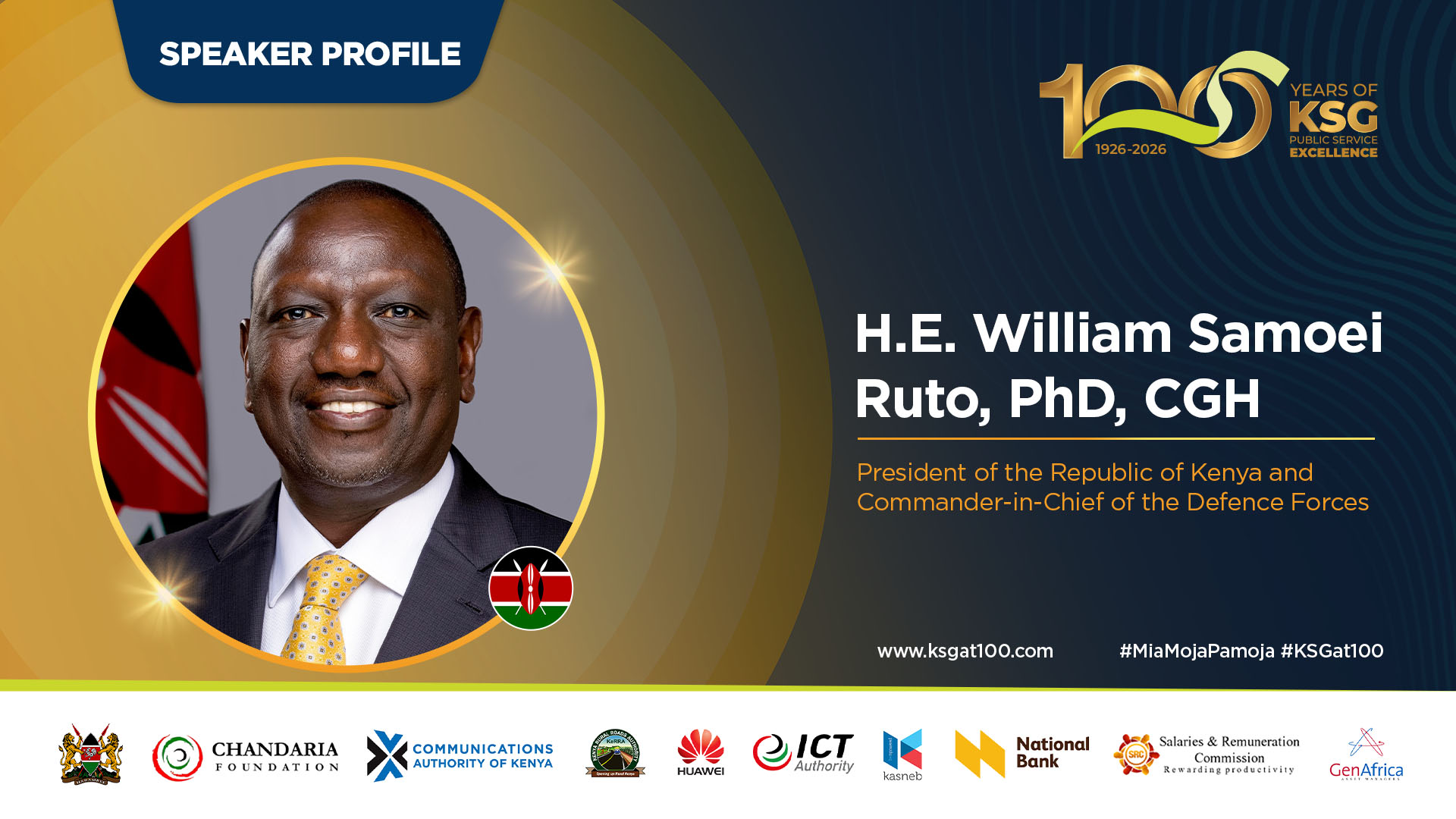
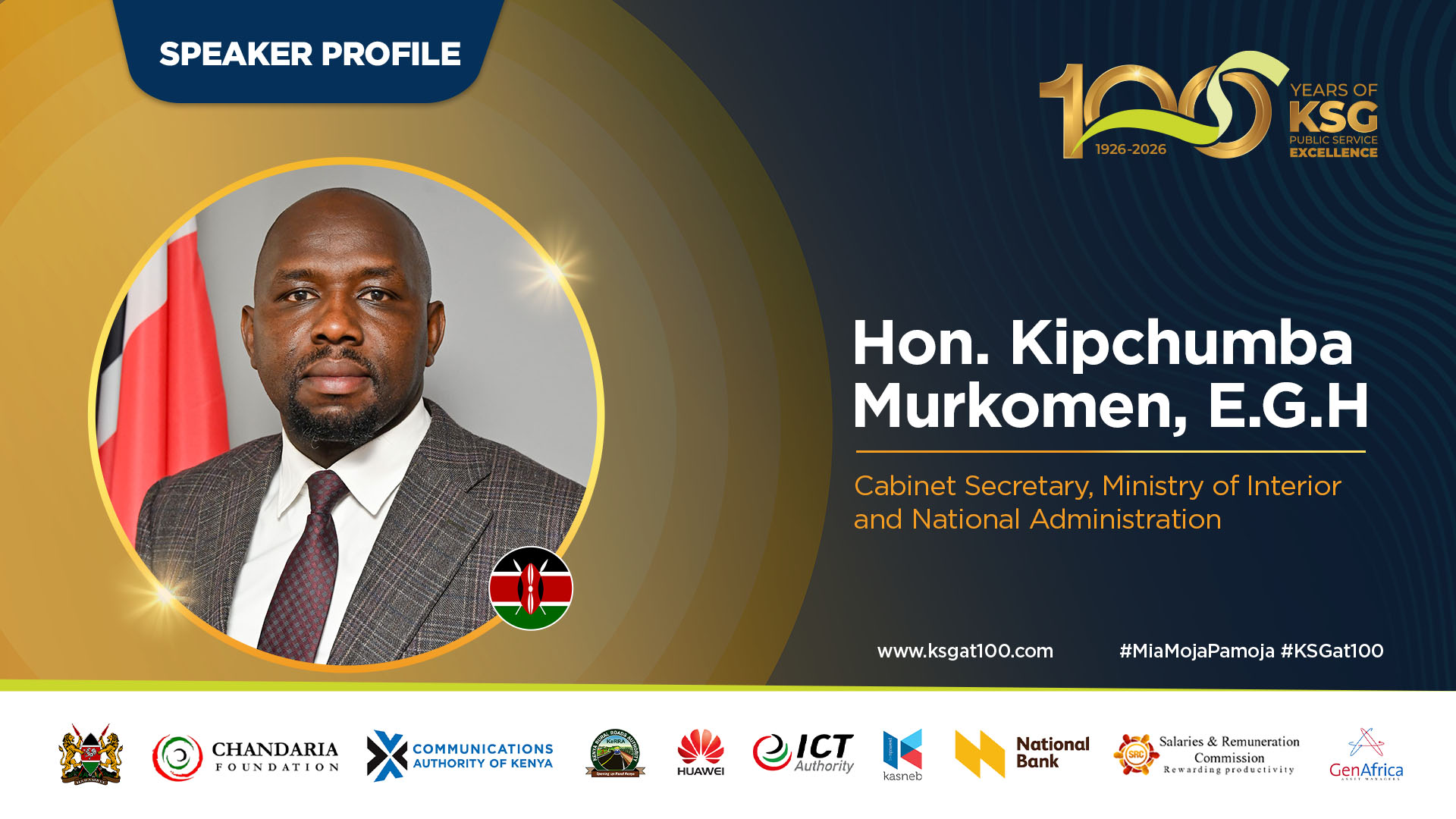
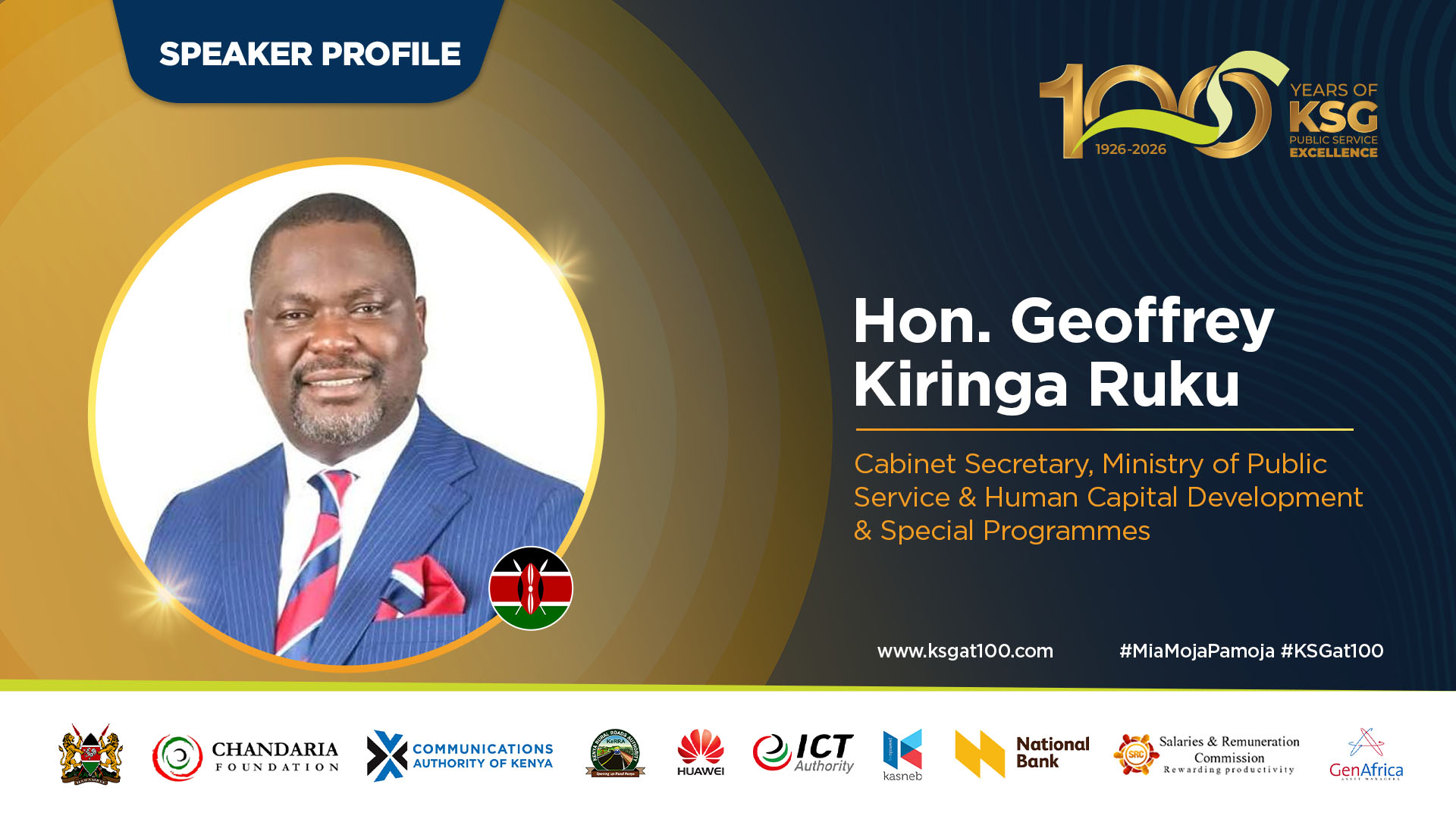
.jpg)
 Baek, Ph.D.jpg)